Not all birds nest in trees. Gulls, Terns, Plovers, and Pelicans are Shorebirds and they nest on the beach, in the dunes, and on the shore. Huguenot Memorial Park in Jacksonville, Florida hosts many different kinds of nesting Shorebirds.
At Huguenot Park you can drive on the beach most of the year but thankfully, during Shorebird nesting season, a large portion of the northern beach is closed to driving to keep the birds safe. On top of the North Point closure, numerous sections where nesting birds wander into are also coned off to protect the birds. These closures can upset beachgoers who, "don't care about the birds." Fortunately for the birds, the City of Jacksonville, Huguenot Park Naturalists and staff, and the bird steward volunteers will continue taking steps to keep them safeguarded and to educate the public on the necessity for such closures.
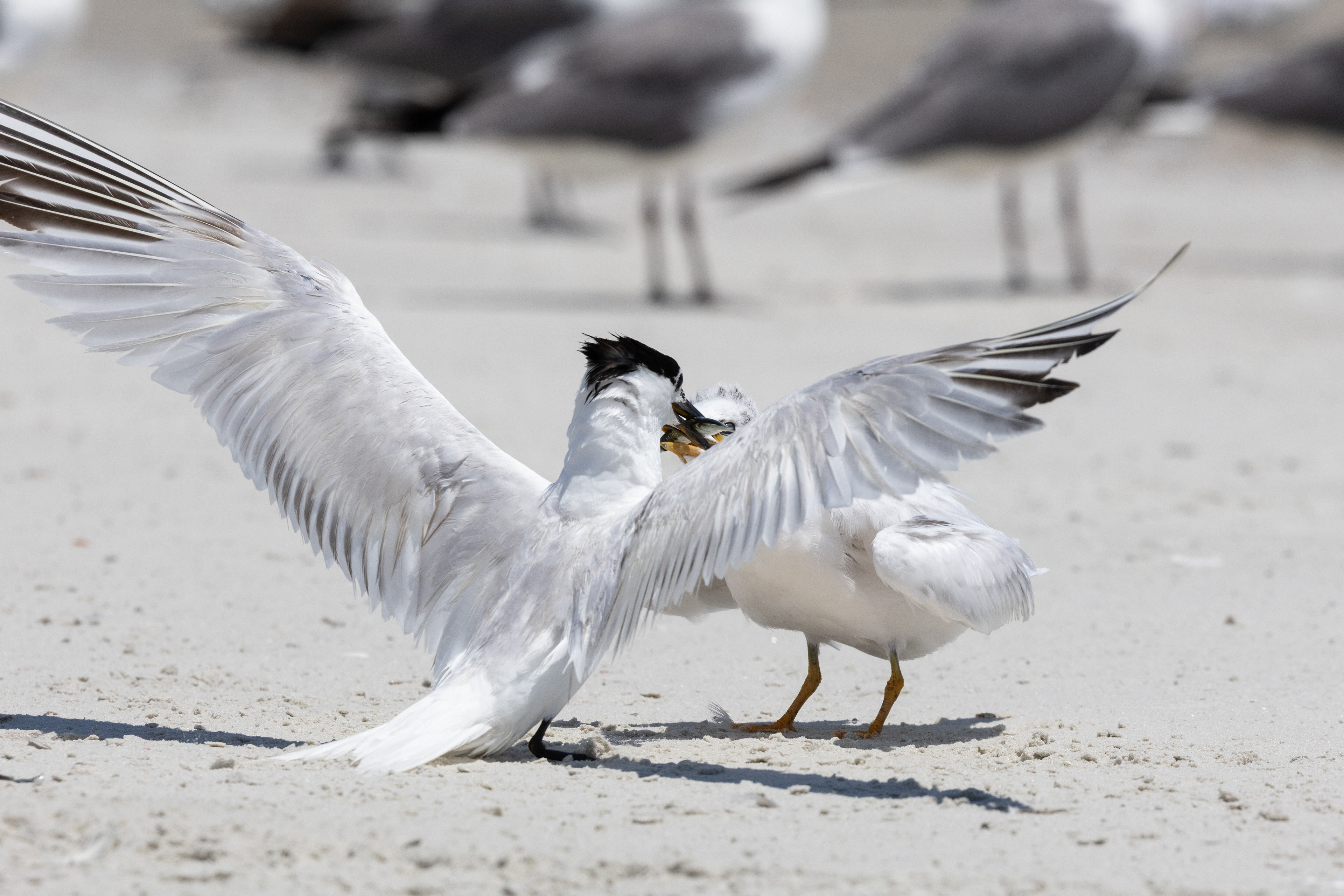
Pictured above is a Sandwich Tern feeding it's young. They are not a conservation risk but are still quite vulnerable to human disturbance in areas with heavy pedestrian traffic like most Florida beaches have.
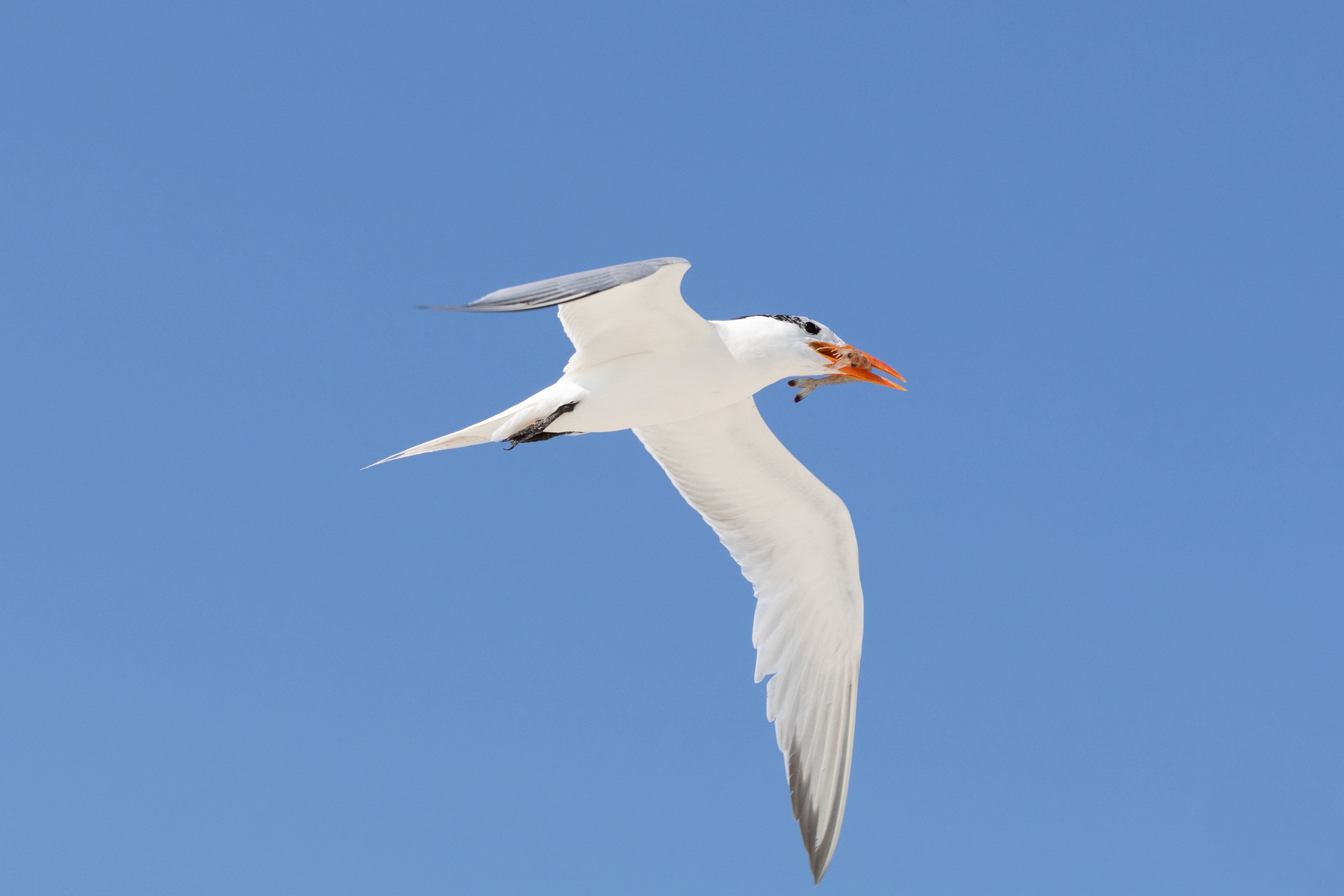
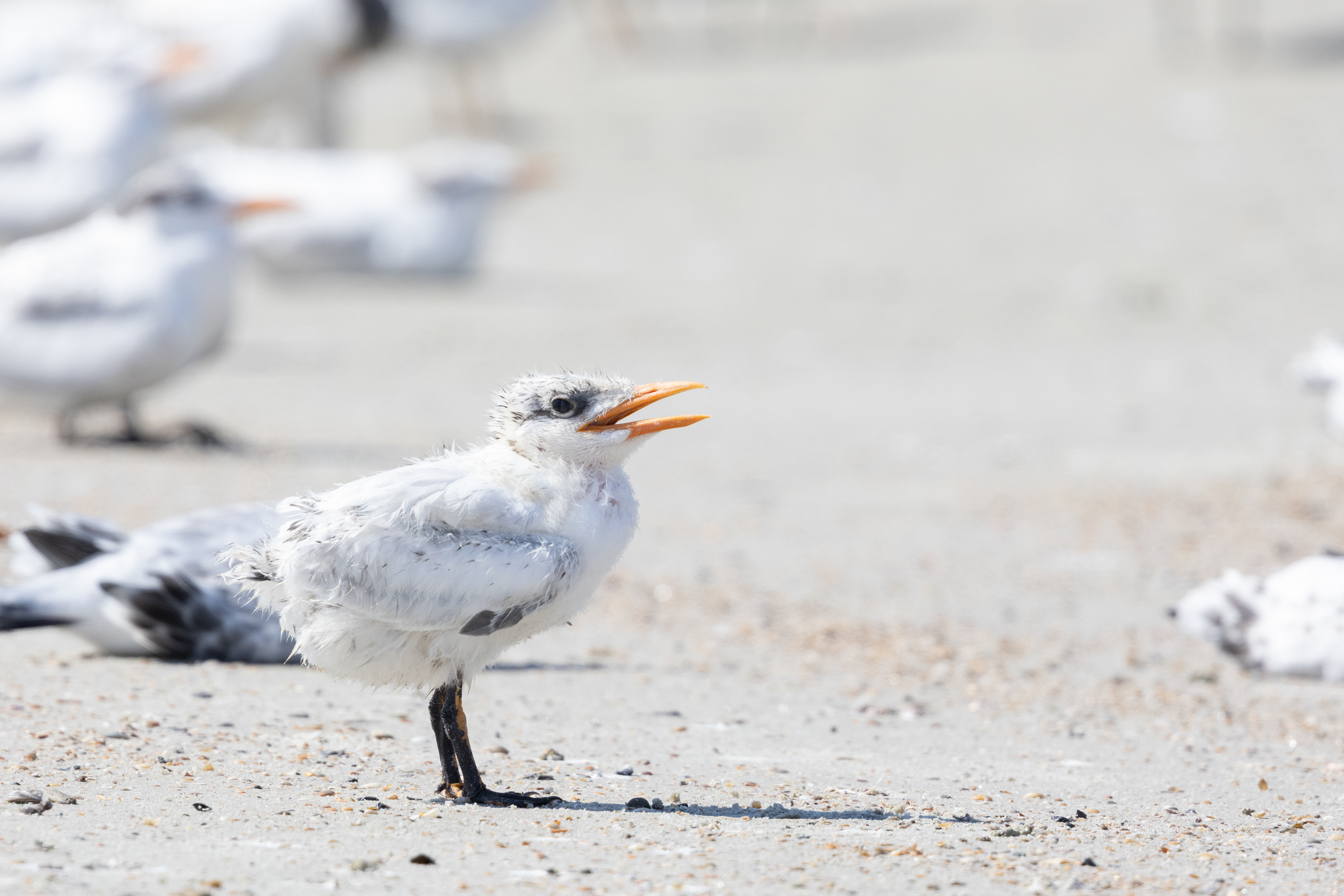
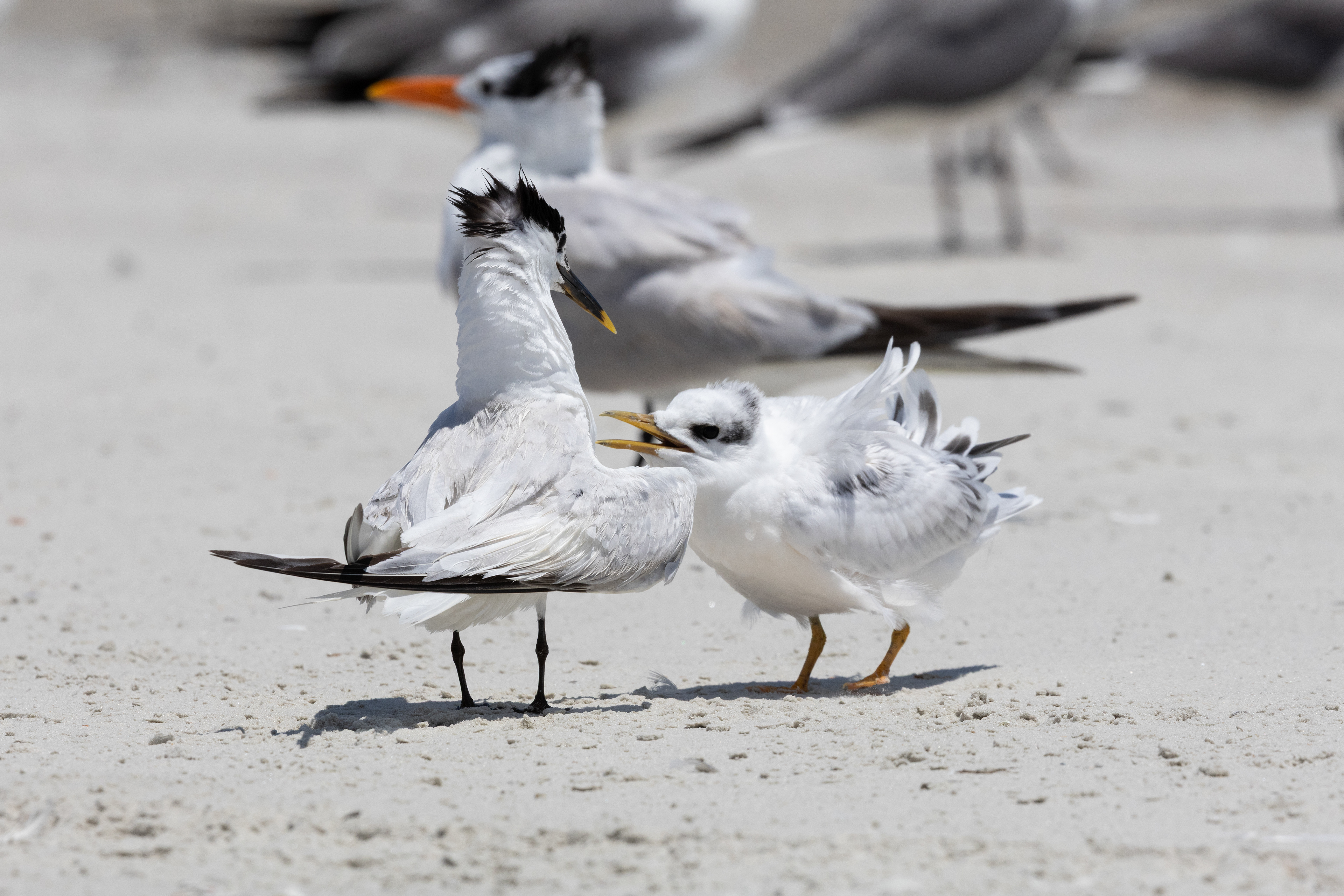
The Royal Tern parents (above, left) forage shrimp or small fish from the ocean while the chick (above, right) waits on shore. The adults find their young by their calls despite all the other birds in the flock calling at the same time.
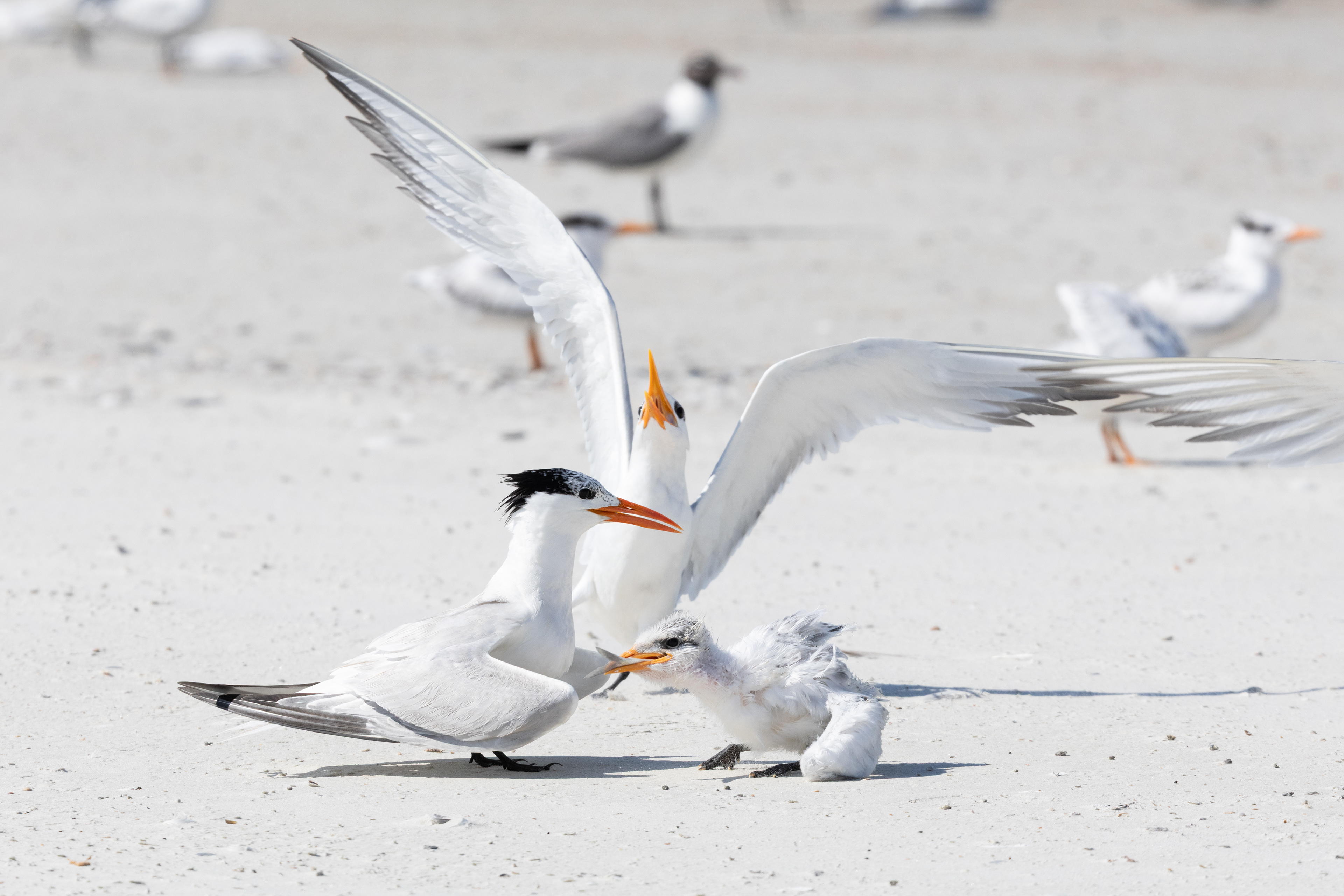
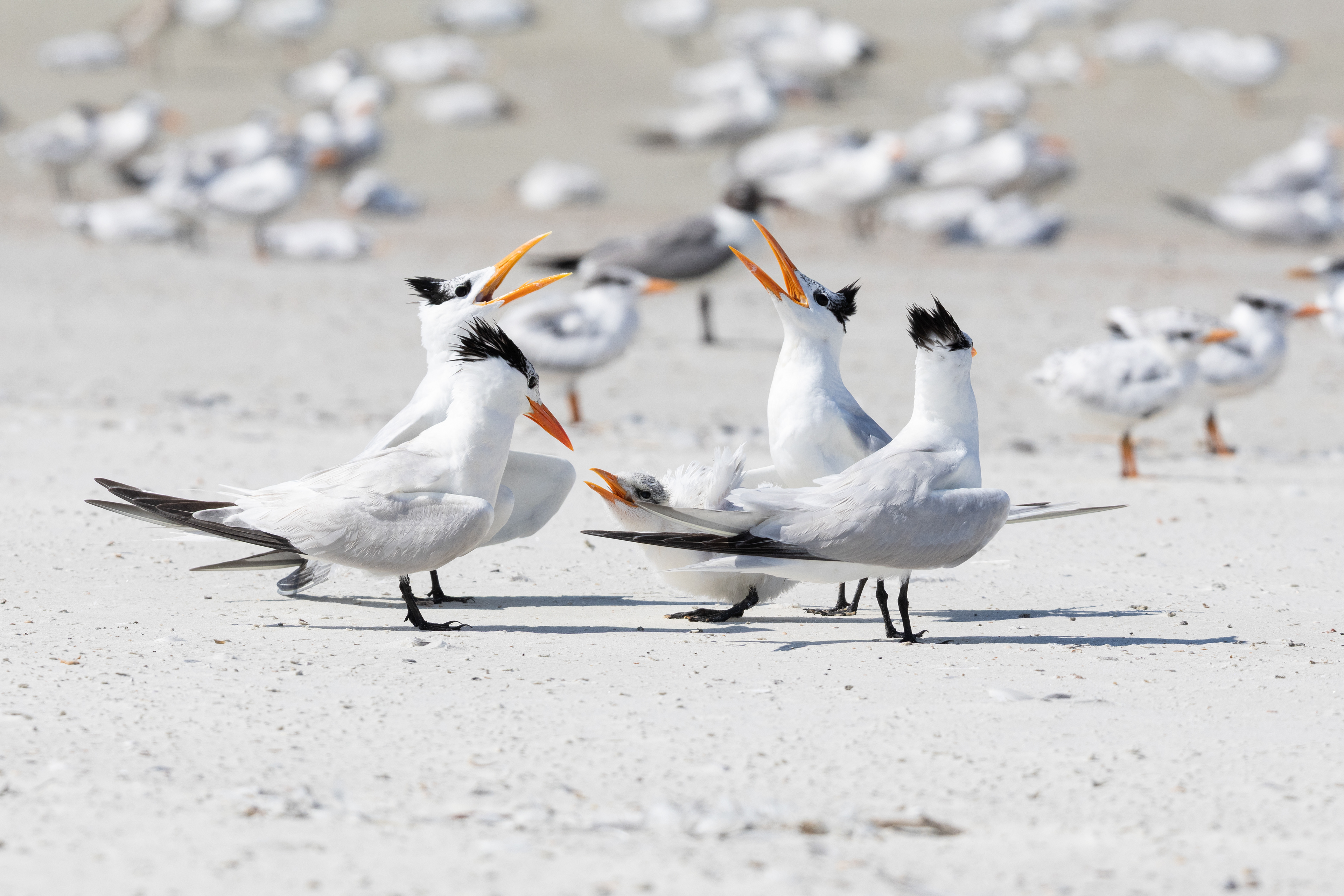
The Royal Terns feed their young (above, left) pretty much the second their feet hit the ground because if they land and take too long, other Terns or (especially) Laughing Gulls will try to steal the fish right out of the chick's mouth. When the fish are big it can take the chick a minute to get them down so other Royal Tern adults will often come hover nearby (above, right) to fight off would-be food thieves.
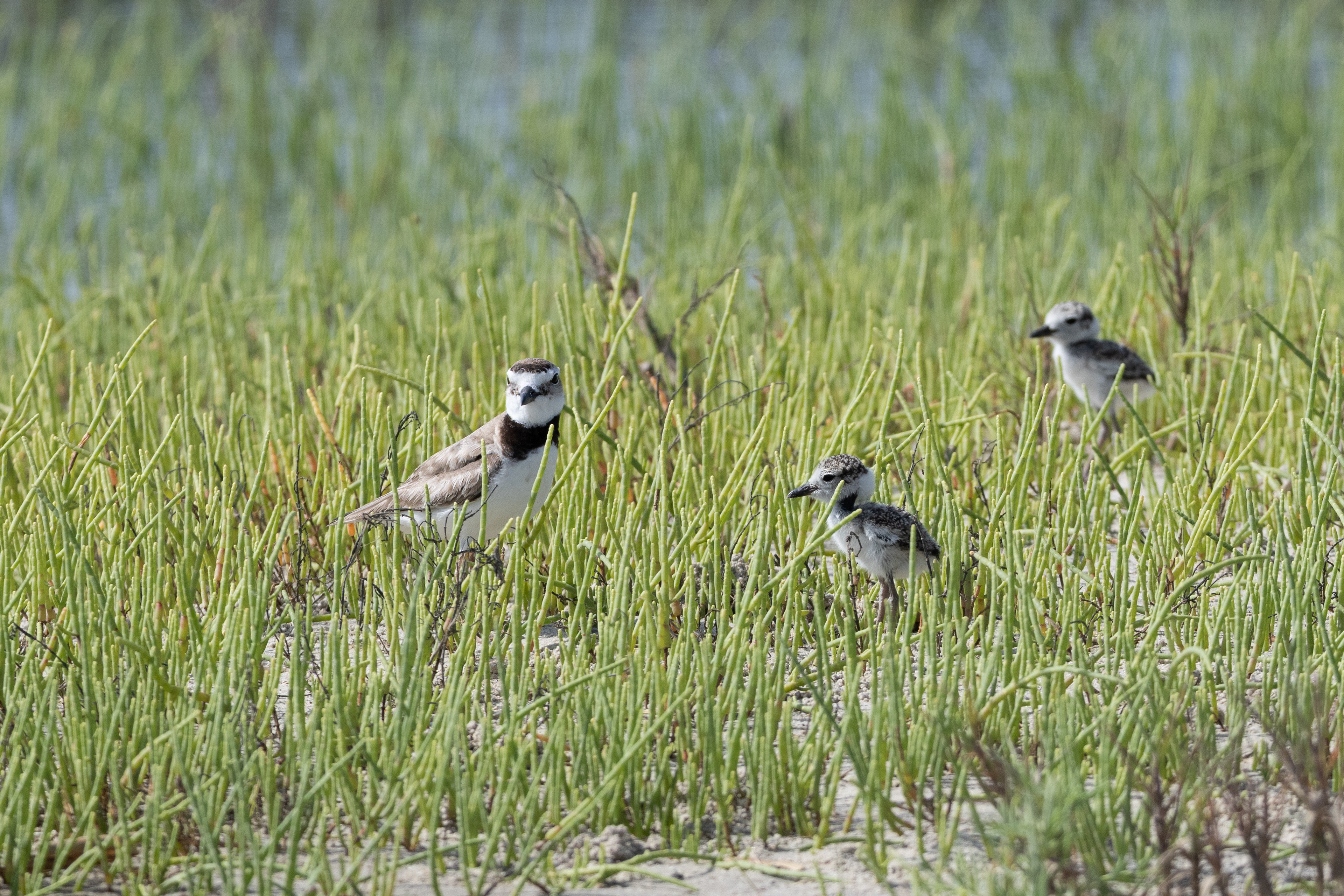
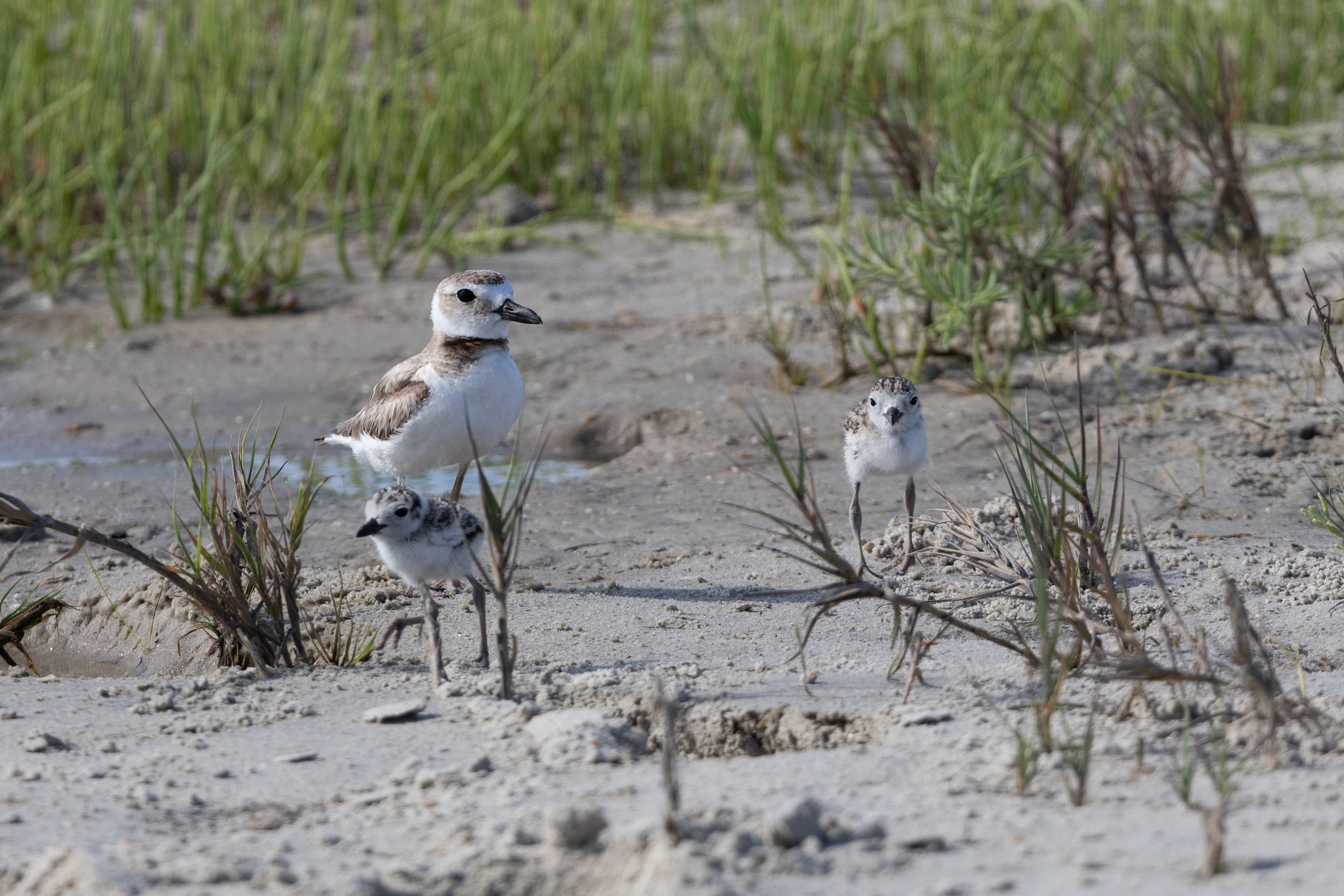
Wilson's Plovers take turns watching the young and hunting for food. Dad (above, left) and Mom (above, right) with chicks have to navigate through traffic with their chicks. When the tide comes in for these particular birds their nesting area is flooded out and the have to cross the street to higher ground. It's always a nerve wracking experience for park staff and stewards to endure because you never know when one of the birds will just dart out into traffic or if people will be able to stop fast enough.
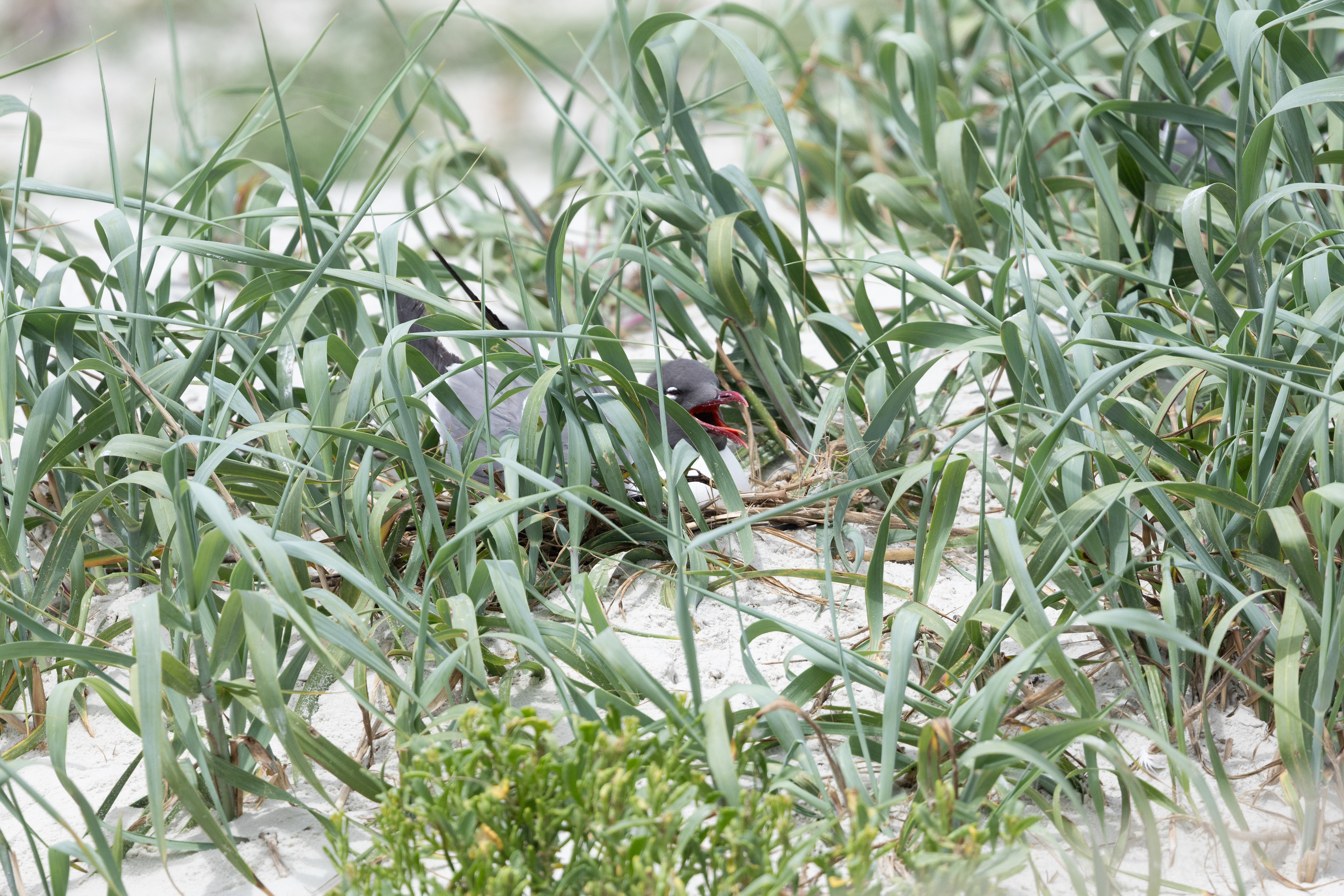
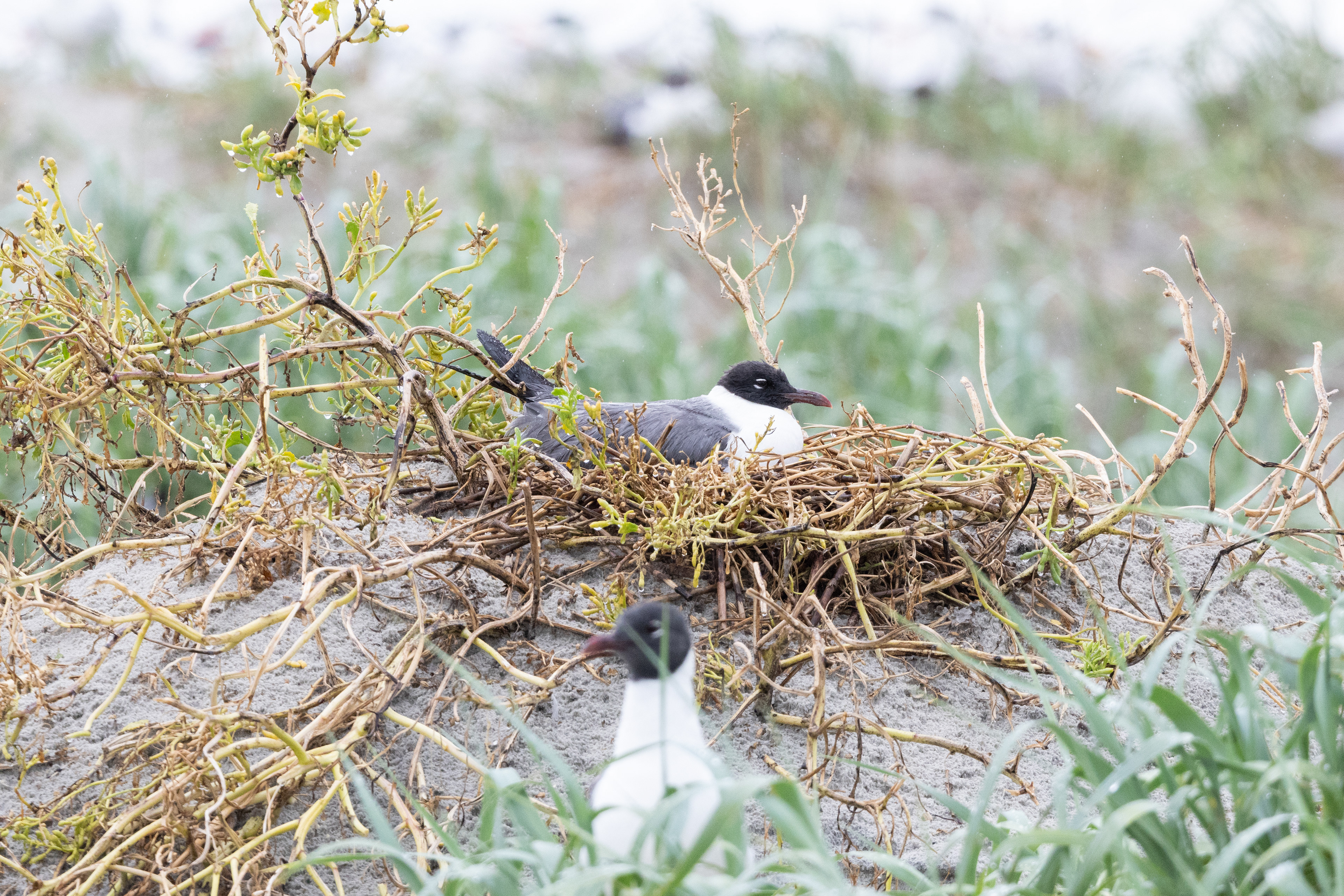
Laughing Gulls are historically bad parents, abandoning, assaulting, or simply not feeding their young enough. Regardless of the previous fact, their numbers are usually steady and they're not currently a conservation risk. Chicks can leave the nest as early as one day but generally stay around the nest during the first week.
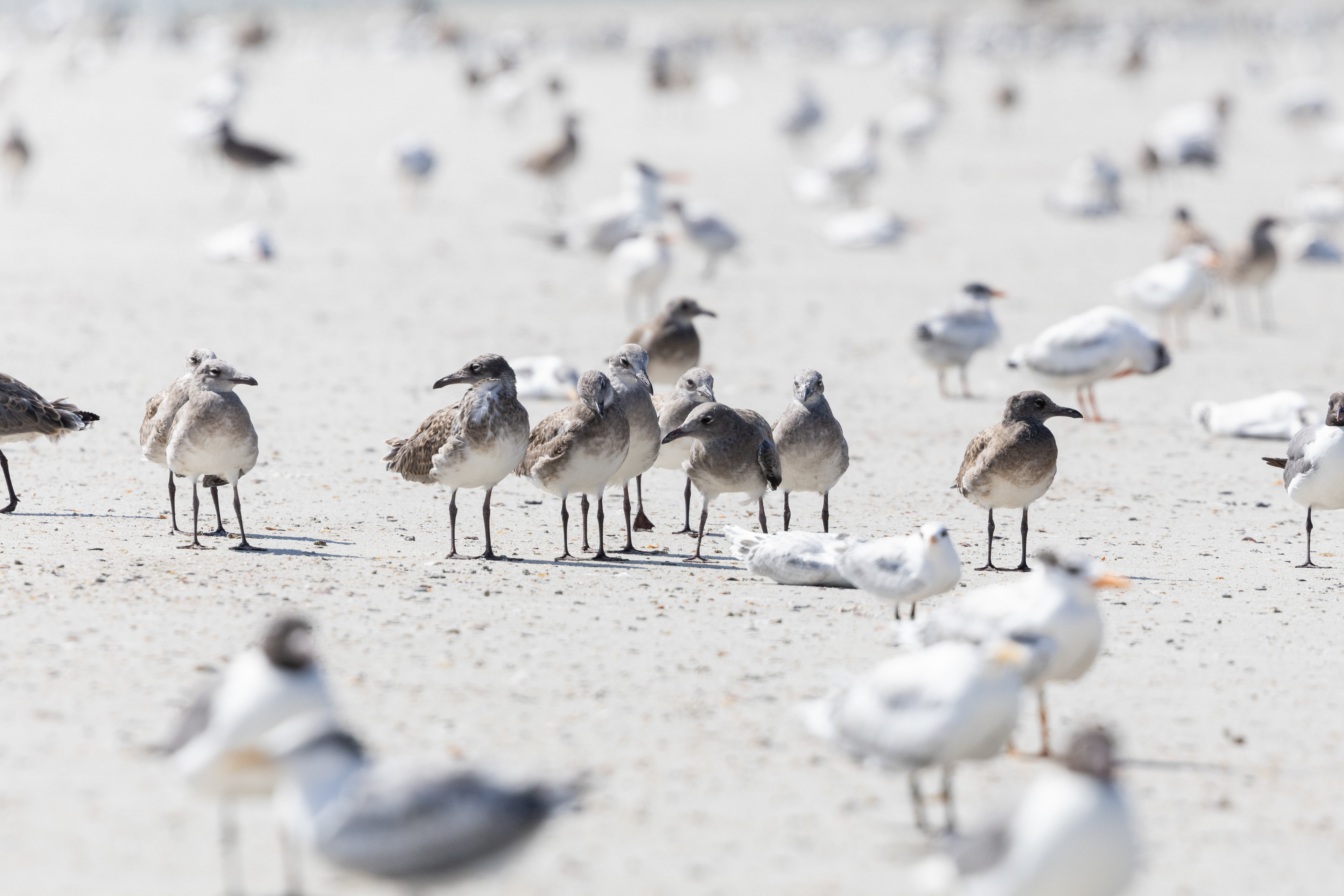
For most Laughing Gull parents, the work isn't done once the babies leave the nest. The adults still need to help feed their young until they become flight capable and can fish for themselves like the ones pictured (left) are.
Unfortunately, young Laughing Gulls have it kind of rough because their parents will often abandon them and they have to try to fend for themselves or perish from lack of nutrients.
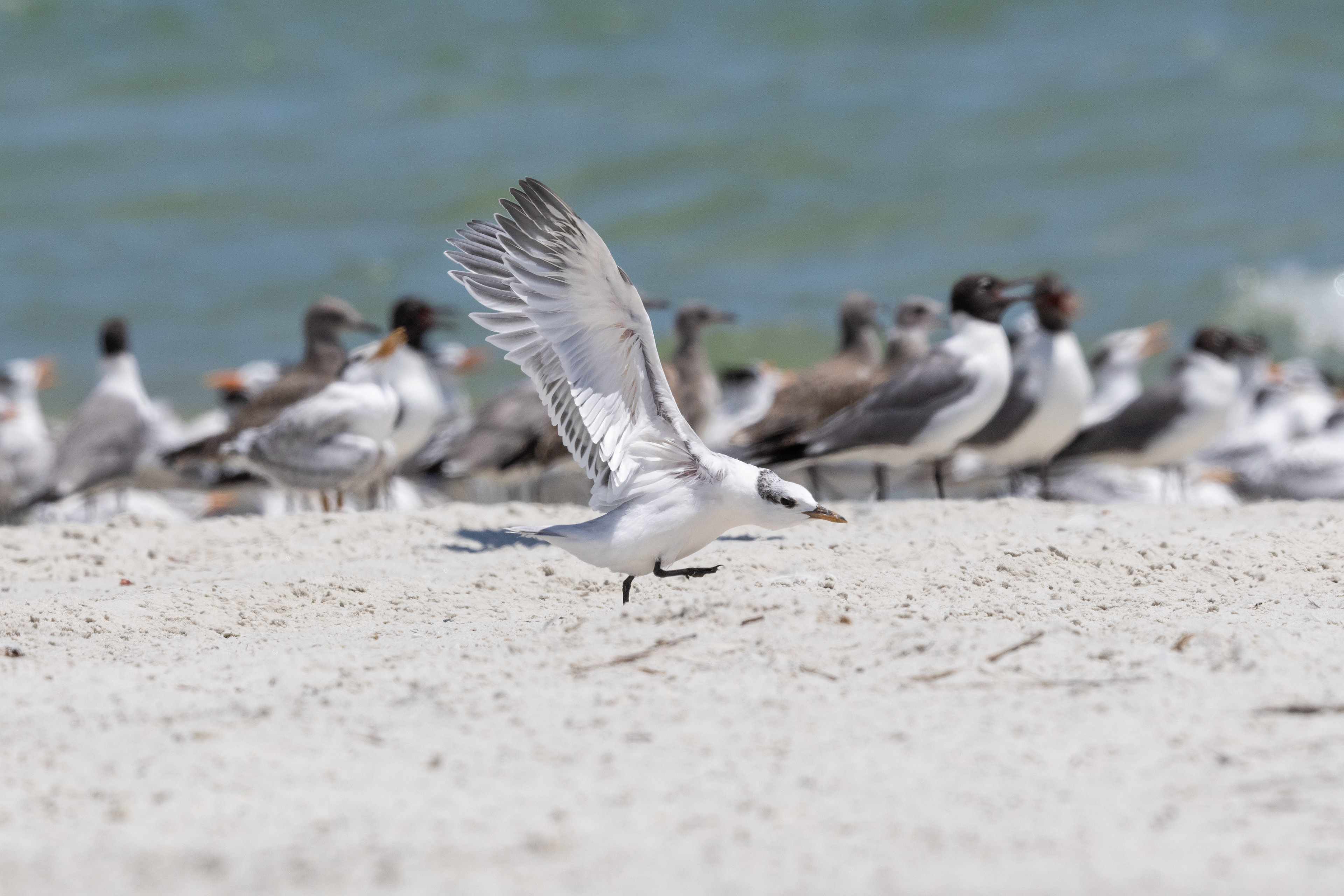
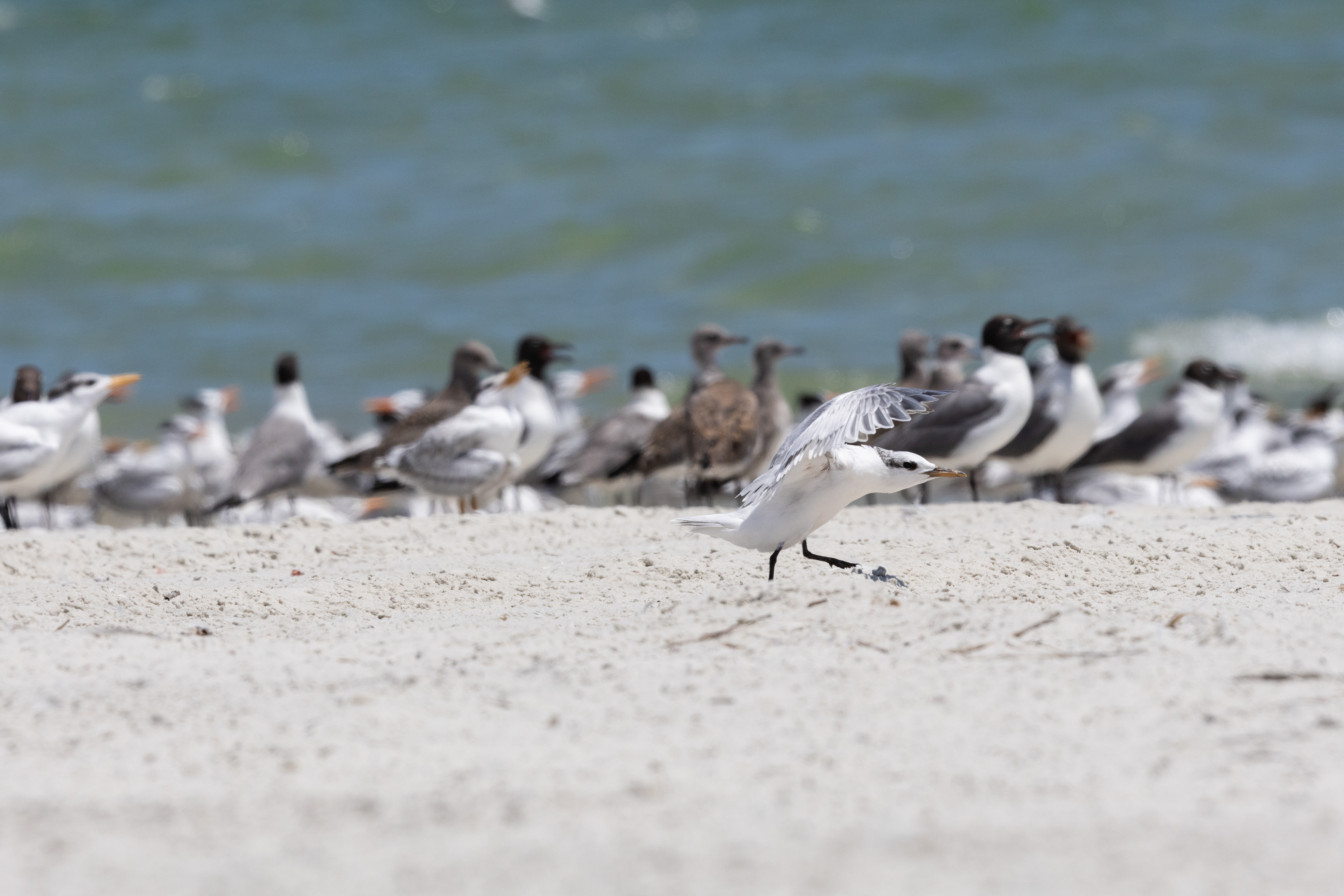
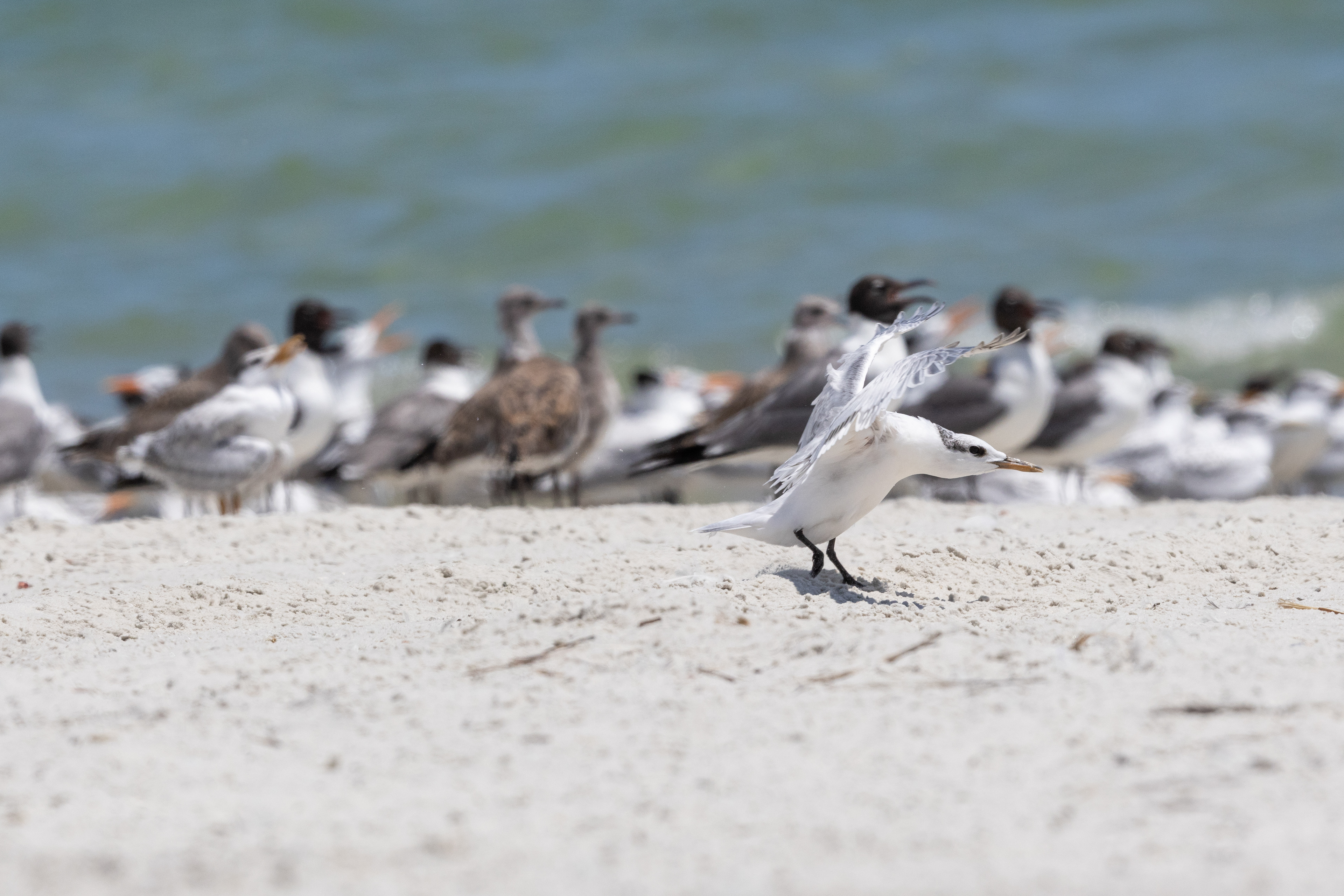
Just because the babies have left the nest doesn't mean that nesting season is done. The young still have to learn to fly like this Sandwich Tern (above) is doing. They'll run with the wind and flap their wings trying to get some air.
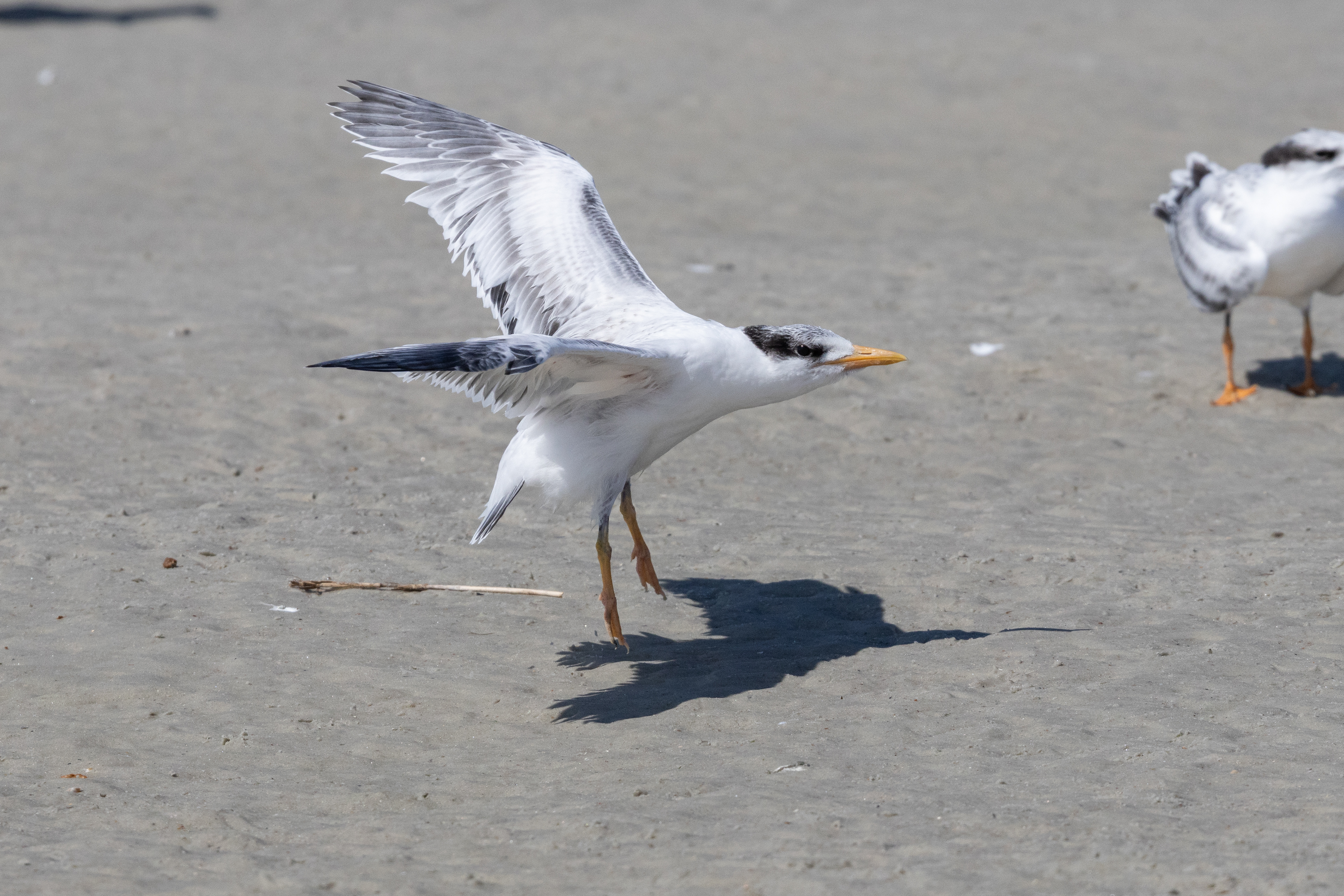
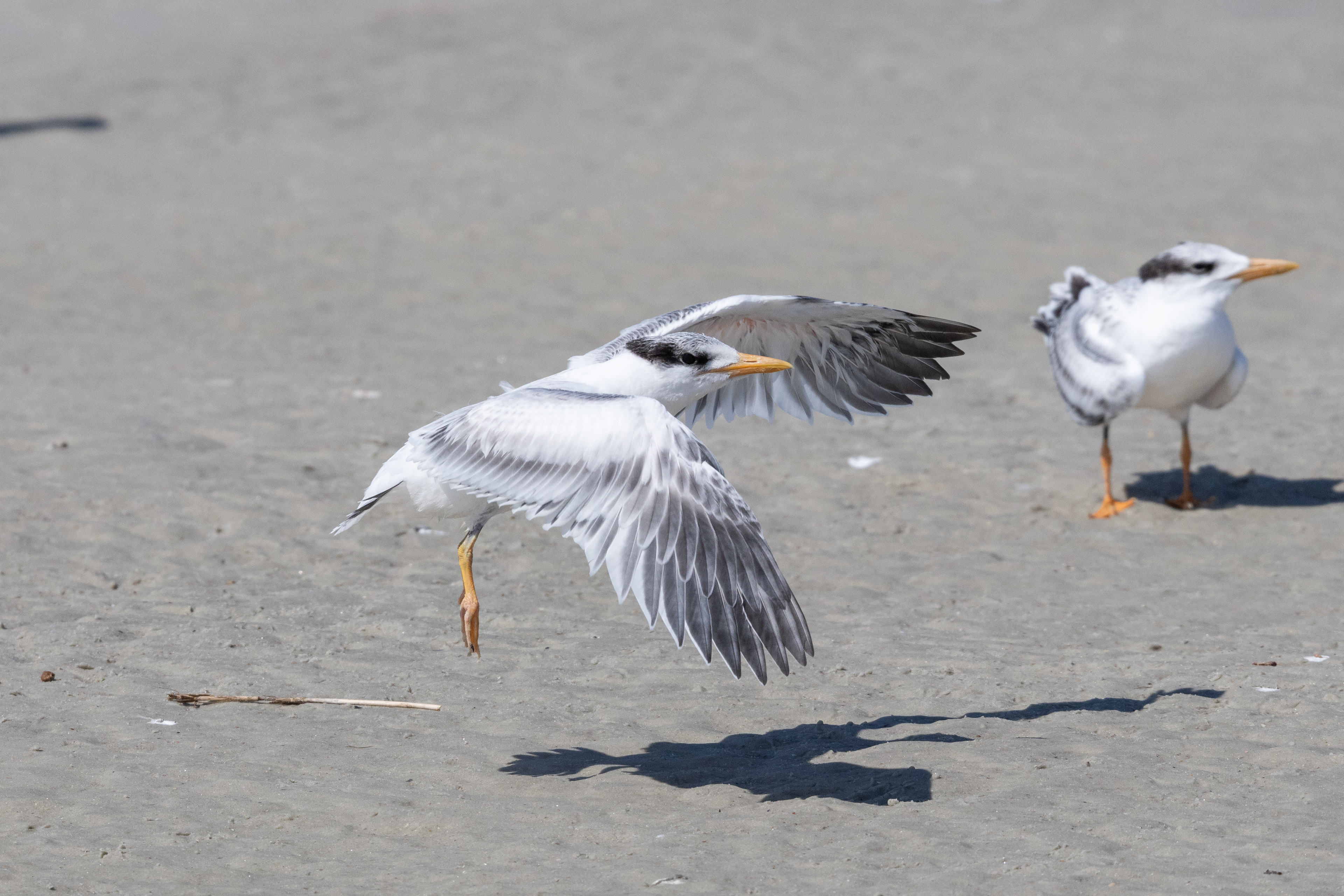
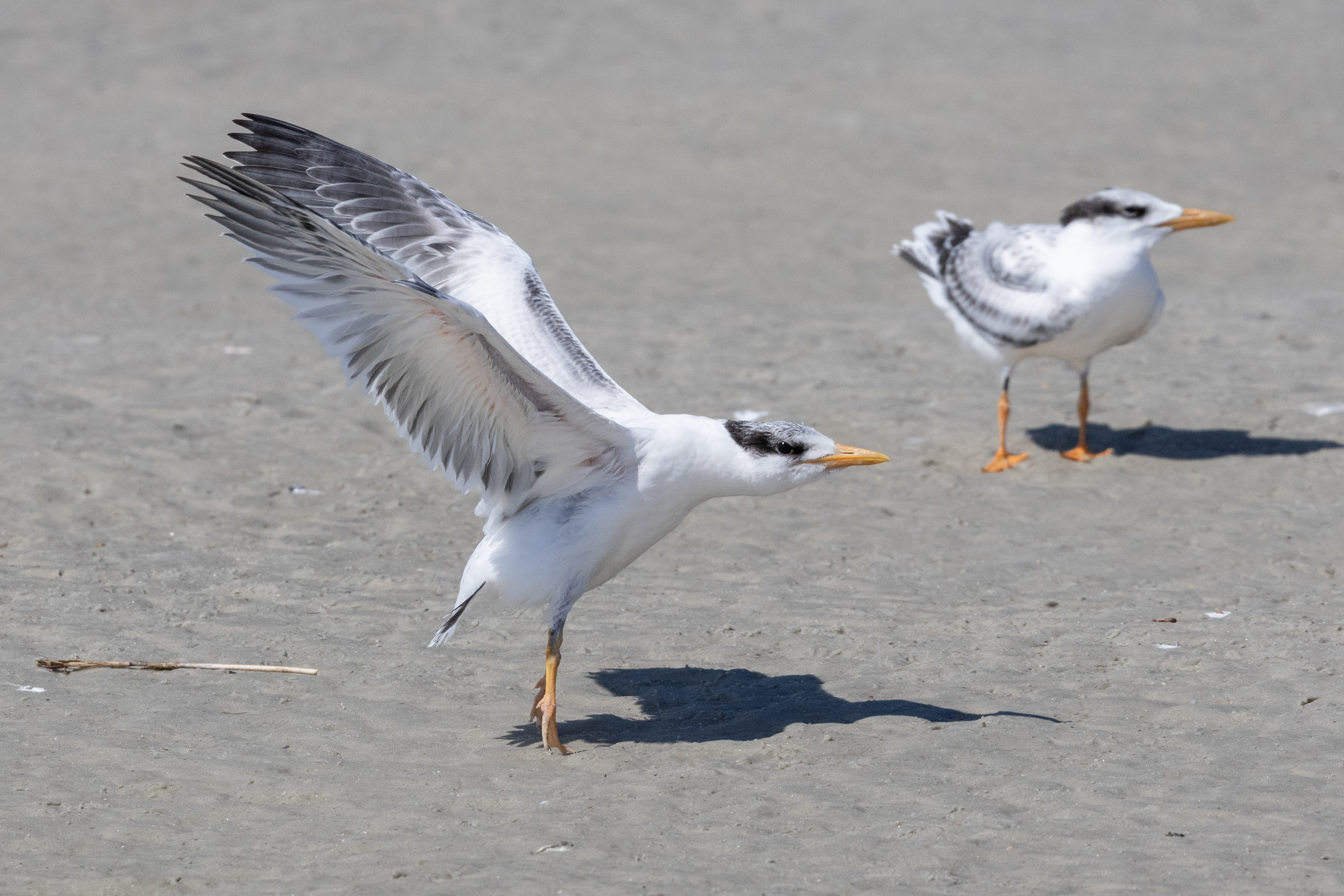
This young Royal Tern (above) is flapping into the wind and hopping in it's efforts to catch some air and takeoff.